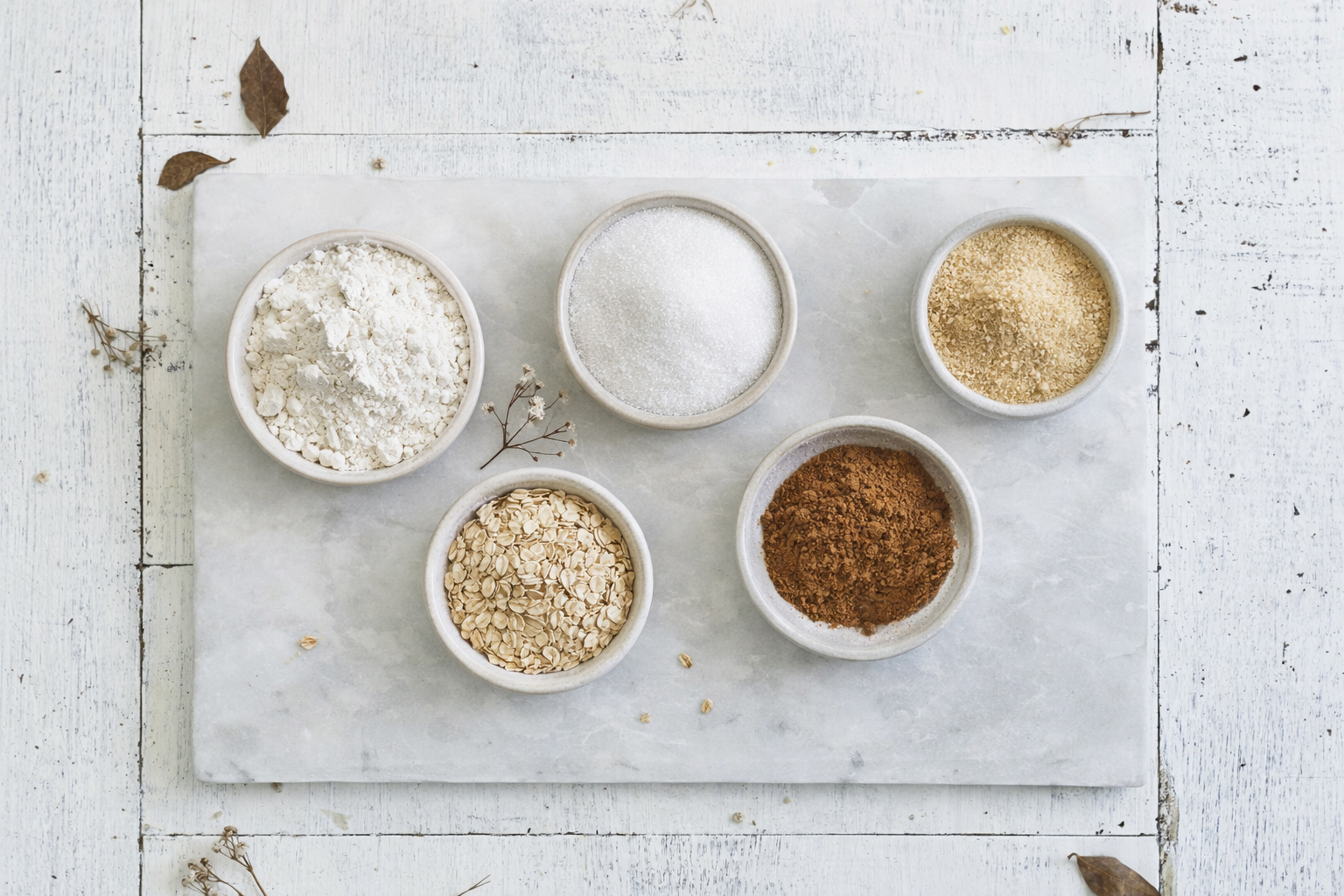
If flour is the bones and sugar is the heart, then leaveners and flavours are the soul of your baking. These are the small-measure ingredients that do all the heavy lifting.
In this guide, we’re looking at how to turn a dense batter into a light, cloud-like sponge, but we’re also going a step further. We’re exploring how to layer flavours through infusions, citrus oils, and acidity to make sure your baking don’t just look incredible, but smell and taste like they’ve been gathered straight from a professional kitchen.

Baking Powder vs. Soda
This is where most of us get a bit confused. Both create bubbles, but they work in very different ways.
- Baking Soda (The Reactor): This is powerful stuff. It needs an acid (like buttermilk, lemon juice, or even cocoa powder) to wake it up. The second they meet, bubbles start forming. This is why you need to get your batter into the oven quickly before all that “lift” fizzes out!
- Baking Powder (The Reliable): This is a bit more self-sufficient. It’s actually a mix of baking soda and a dry acid. Most are double acting, which means it bubbles once when it hits the liquid and again when it hits the heat of the oven.
Vanilla & Salt
In my kitchen, I don’t just add sweetness, I add depth.
- The Vanilla Standard: If you can, reach for vanilla bean paste over essence. Those tiny black specks aren’t just for show, they carry the oils of the bean that give you a deeper vanilla flavour.
- The Salt Secret: It sounds a bit backwards, but sea salt is sugar’s best friend. It wakes up the flavour of chocolate and caramel. I often like to finish my baking with a tiny pinch of flaky sea salt.
Substitutes
| If you need… | And you only have… | The Substitute |
| Baking Powder | Baking Soda | Use 1/4 tsp baking soda + 1/2 tsp cream of Tartar for every 1 tsp needed. |
| Baking Soda | Baking Powder | Use 3x the amount of baking powder. (Just note it might change the browning a bit). |
| Vanilla Bean Paste | Vanilla Extract | Use a 1:1 swap. You’ll lose the speckles, but the flavour is still there. |
Beyond The Extract
While a bottle of vanilla is a staple for a reason, the best flavours often come from the ingredients themselves. Here are a few ways to layer your flavour to make your baking feel a little more special.
The Art of Infusion
Baking isn’t just about what you drop into the bowl; it’s about what you steep. Think of this like making a cup of tea for your cake. If your recipe calls for milk or melted butter, you can use that warmth to extract flavor from the source.
Letting a few sprigs of lavender or some tea leaves sit in your warm milk for 10 minutes adds a hint of flavour that a bottle of essence just can’t mimic. Just remember to strain the liquid before it goes into your batter!
Citrus: The Secret is in the Skin
When we want a lemon cake, many of us reach for the juice, but the real flavour actually lives in the skin. The juice provides the acidity (which helps your cake rise), but the zest holds the essential oils that provide that bright, citrus hit.
- The Gatherer’s Hack: Before you start mixing, try rubbing your citrus zest directly into your sugar with your fingertips. The sugar acts as a gentle abrasive, releasing the oils and favouring your entire baking from the inside out.
Acidity: The Secret Brightener
Just like salt, acidity (think lemon juice, vinegar, or buttermilk) acts as a highlighter for other flavours. It doesn’t just help the baking soda react; it cuts through the richness of the butter and sugar so the cake doesn’t feel too heavy.
A squeeze of lemon or a spoonful of yogurt doesn’t always make a cake taste sour, it just makes the other flavours, like berry or vanilla, feel a lot more vibrant and bright.
The Chocolate Enhancer
This is a classic hack that never fails to impress. If you are making anything chocolate-heavy, add a teaspoon of espresso/coffee powder or a splash of cold coffee to the batter.
Think of coffee as a magnifying glass for cocoa. It doesn’t make the cake taste like a mocha; it simply deepens the darkness of the chocolate and makes it taste “more like chocolate”, if that makes sense. I use this hack without fail, every time I’m baking anything chocolate!
The Infusion Table
| To get this flavour… | Steep this… | In your… | The Baker’s Note |
| Floral & Fresh | Lavender or Rose petals | Warm Milk | Only use a little! 10 minutes is plenty to keep it from tasting soapy. |
| Bright Citrus | Large strips of Lemon zest | Melted Butter | Use a vegetable peeler for wide strips so they’re easy to fish out. |
| Warm Spice | Whole Cinnamon sticks | Warm Cream | Cracking the sticks open first releases way more flavour. |
| Woody & Earthy | Fresh Rosemary or Thyme | Neutral Oil | Gently warm the oil with the herbs, then let it cool. |
| Deep Toffee | Used Vanilla Bean pods | Sugar (stored) | Bury used pods in your sugar jar to give a vanilla infusion for when you use it it next time. |
A Quick Rule of Thumb
- The Warmth: You don’t need to boil your liquids, just a gentle warm-up is enough to wake up the oils in your herbs and spices.
- The Strain: Always remember to strain your liquids through your Fine-Mesh Sieve before adding them to your batter. You want the flavour, not a mouthful of rosemary needles or cinnamon bark!
- The Time: Most infusions only need 10–15 minutes. If you leave herbs in too long, they can start to taste a bit grassy rather than fresh.
Lift & Flavour FAQs
Q. How do I know if my baking powder is dead?
A. Don’t risk a whole cake on old baking powder! Drop half a teaspoon into some hot water. If it fizzes up instantly, it’s good to go. If not, it’s time for a new box.
Q. Why did my cake rise and then sink?
A. This is usually a “too much of a good thing” situation. If you use too much baking powder, the cake rises too fast before the flour is strong enough to hold it up. It’s like blowing up a balloon until it pops.
Q. Can I leave out the salt?
A. You can, but your baking will taste a bit flat. Think of salt like the volume on a radio, it doesn’t change the song, it just makes the flavours louder and clearer.
Q. Can I use any herb for an infusion?
A. Most woody herbs (like rosemary, thyme, or sage) and floral petals (like lavender or rose) work beautifully. Just be careful with soft, leafy herbs like parsley or cilantro, they tend to go a bit savoury and limp when heated. Stick to the aromatics that smell like they’d pair well with a bit of sugar!
Q. If I add lemon juice for flavour, do I need to change my baking soda?
A. Great question. Because lemon juice is an acid, it will make your baking soda react faster and more vigorously. If you’re adding a significant amount of juice (more than a tablespoon), you might find your bake rises very quickly. Just make sure the oven is ready to go the moment the wet meets the dry!
Q. Why can’t I just use more vanilla essence instead of bean paste?
A. You can, but essence is often alcohol-based, and a lot of that flavour evaporates in the high heat of the oven. Vanilla bean paste (and the beans themselves) contain the natural oils of the pod, which stick to the fats in your baking and stay fragrant even after the timer goes off.
Q. Do I have to use coffee in chocolate recipes?
A. Not at all, but once you try it, it’s hard to go back! If you’re worried about the caffeine, a decaf espresso/coffee powder works exactly the same way. The goal isn’t a caffeine kick; it’s just about using those bitter notes to make the cocoa taste more intense.
Q. My citrus sugar feels wet after rubbing in the zest, is that okay?
A. Yes, that’s exactly what you want! That moisture is the essential oil being released from the zest. It might make your sugar look like damp sand, but it will dissolve perfectly into your butter and distribute that flavour way better than if you just tossed the zest in at the end.